Two public restrooms. Imagine two restrooms that are public. The other is located at the trailhead’s remote location, and is surrounded by a vast open area.
Both buildings offer the same services, but when they were constructed as identical structures it would be difficult to know how these places function.
Site selection is key to building good public restrooms. Who will use it? How many people are allowed to be in the facility at once? What is the best way to get utilities? How far can visitors walk? What architectural style is surrounded by the building?
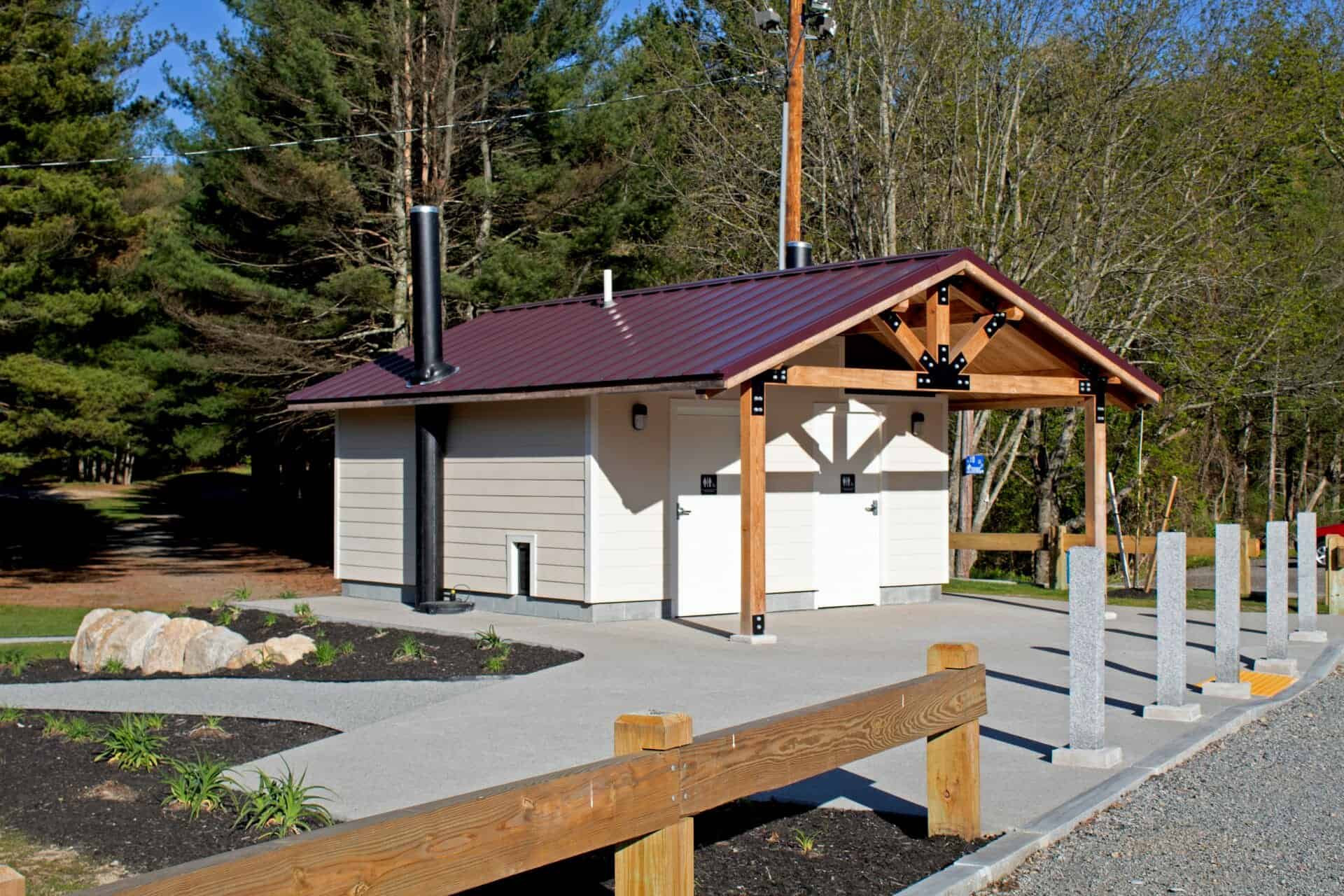
Image credit: romtec.com
These answers will determine almost all decisions that are made.
Begin by watching how people are moving around the site
The location of restrooms should not be considered separately from the rest a park. In a sporting complex there are large crowds that crowd around games and events. The location of restrooms close to a playground should be suitable for families, while also being safe and accessible to pedestrians. In a downtown setting, sidewalk restrooms may have to work within a tighter footprint and complement nearby streetscape features.
The building is just one part of the overall experience. The location of the building is influenced by many elements, including accessibility, nearby activities routes, entrances and pathways.
Remote sites can cause a different Problem
The project should be moved further from the existing infrastructure and streets. The standard sewer service might not be available at a scenic view point or in remote recreation areas, trailheads, campgrounds, or any other area. Vault toilets are an option which can be utilized in areas where plumbing infrastructure isn’t feasible or impossible.
The design process is completely different. Instead of picking a structure, project teams should evaluate the existing conditions on the site to determine which restroom system is the best one for the area.
Capacity should reflect the actual usage
A park in a peaceful neighborhood or a sports facility locally don’t have the exact kinds of people who visit. Peak demand is critical. The peak demand is crucial.
Before construction, owners should think about the use of bathrooms, their size, layout, and requirements for maintenance.
The flexibility of park restrooms that are prefabricated can be very beneficial to businesses considering the facilities. Instead of forcing the space to comply with a specific design, the facility is able to be customized according to the needs of the project.
Even though Architecture is still a part of the conversation
The function doesn’t mean that appearance must be overlooked. Bathrooms are a visible part of a landscape that is public. Roof shapes, siding colors fixtures, masonry as well as other architectural features could aid in connecting it to nearby pavilions or concession buildings and the natural environment, the design concept, or a community.
Romtec’s bespoke approach lets teams to work with different colors, materials and shapes, as well as exterior designs, instead of being limited to the standard appearance.
Design for Place, Not Just the Design for Place.
Romtec works with park owners, landscape architects, and contractors to design and construct restroom buildings as well as other public buildings. Its expertise extends to documents for building construction, code concerns, ADA issues, engineering selection of the right components and construction in the United States.
The most important point of departure, is, however, surprisingly easy. Do not start by asking what restrooms you can construct on your property. Start by understanding what is already taking place on the location which includes people, activities and infrastructure. Make the design that is appropriate for this place.