The treasurer is in possession of accounting software. The president is able to access a folder with governing documents that are stored in cloud storage. Resident emails are spread over personal inboxes. Someone’s phone has photos of infractions. Another board member has the password to the website.
Technically speaking, everything exists.
The right choice is a different matter.
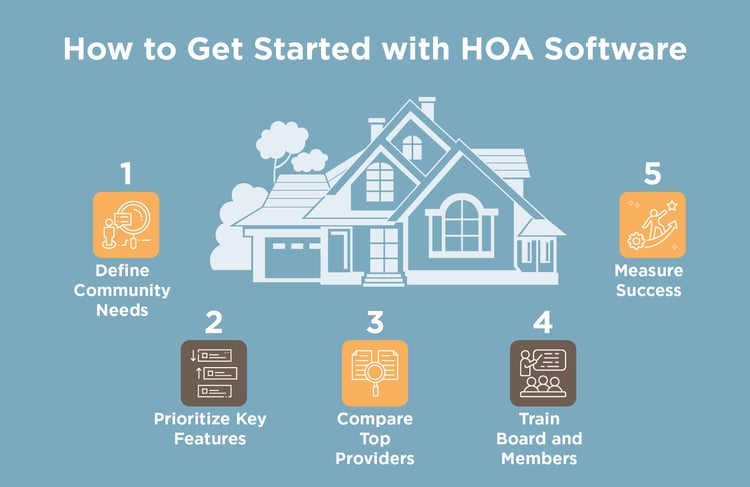
The administrative burden of a homeowners’ association that is managed by itself can increase over time, one small solution at a given time. A spreadsheet can solve one issue. Another issue is resolved by using a chat room. Then the board adds online payments sharing storage accounting software, a website, and yet another system to communicate with residents.
In the end, the volunteers will spend almost half the time working on tools as managing the community.
The issue isn’t with self-management.
Self-management gives an association complete control over its activities. The issue is that board members are volunteers, not full-time administrative personnel.
The board continues to collect assessments, keep track of records of owner information, track expenses and communicate with residents. They must also keep track of violations, organize documents create reports, and store files.
Good HOA management software should reduce that administrative load without taking control away from the association.
Perfect HOA does this by merging all records (units, finances, payments and communications) including documents, violations, as well as the resident portal as well as meeting minutes into a cloud-based system.
What happens when a owner leaves?
Instead of re-updating one spreadsheet with an owner’s address and updating the contact list, checking out another payment method or manually changing website access central records can prove efficient for all administration functions.
The Treasurer shouldn’t have to reconstruct the financial picture
HOA finances can create similar issues when the data is dispersed.
Bank transactions take place in one place. Assessment payments are made elsewhere. The budget can be another spreadsheet. When asked how spending compares with the annual budget the treasurer is required to determine the data.
HOA Accounting Software can be more beneficial when it’s integrated with the everyday activities of the organization.
Perfect HOA allows you to integrate your bank and credit card activity using Plaid. You can categorize your transactions and create reports, like Profit and loss Actual vs. Budget, and Cash Flow. The operating, reserve and special-assessment accounts can be monitored in separate ways.
This is important because HOA Accounting doesn’t only involve calculation of the annual sum. A board could need to determine if landscaping expenses exceed budget, what amount of money is left in a reserve account, or if assessment collections are keeping pace with planned expenses.
The more simple these answers are to retrieve, the less dependent the community becomes to one individual’s private spreadsheet.
Residents shouldn’t need to know what’s happening.
Centralization can also improve the experience of residents.
Consider the typical questions an HOA gets. Where are my records? Is my payment in? How do I find the latest notice? Where can I get information on the Association?
A excellent HOA website creator will do more than design an official website for the public. Perfect HOA connects the community website with a resident portal to ensure that owner information and other documents remain connected to the management system that is in place.
This eliminates the necessity of maintaining a separate set of data for the board and another set for the website.
It also lets residents locate the right person prior to contacting a volunteer member of an organization for something in place.
Good Records Matter Most When Things Go Wrong
The real test of an HOA’s management system comes months after the fact.
The resident is able to contest an infringement. A person is unsure if a notice was even sent. A new board would like to understand the reasons of an old decision. An auditor needs financial information. A treasurer quits abruptly.
At that point, memory won’t be enough.
Perfect HOA maintains communications histories, delivery details, documents, and timelines for violations. Photographic evidence including notices of escalation fines, and other details could be included with a violation rather than needing to reconstruct it from scattered emails.
Even board meetings create records that need to be preserved. AI-generated minutes of meetings can ease the effort of turning meetings that are long into useful written record.
Self-management in an HOA involves people making choices. Software cannot take the place of that decision-making.
It’s time to end the investigations that surround it.
If financial records including resident information, documents, communication, payment, violations, and access to community information are all in one, board members spend less time asking “Who is responsible for this?” and more time dealing with the issue that requires their judgement.
It is perhaps the most important automation to the board of volunteers.